Beef Shank Recipe: Slow-Cooked Method Explained
Ever wondered how to transform that tough, sinewy cut of beef into a mouthwatering masterpiece that falls off the bone? The secret lies in understanding the art of slow cooking, particularly when it comes to a classic beef shank recipe.
Beef shanks are one of the most underrated cuts of meat, offering incredible flavor when prepared correctly. This economical cut comes from the leg of the cow and contains a high amount of collagen, which breaks down during slow cooking to create a rich, silky texture.
In this comprehensive guide, I’ll walk you through a foolproof beef shank recipe that will have your family and guests raving. The slow-cooked method ensures tender, succulent meat that’s packed with deep, complex flavors.
Ingredients List
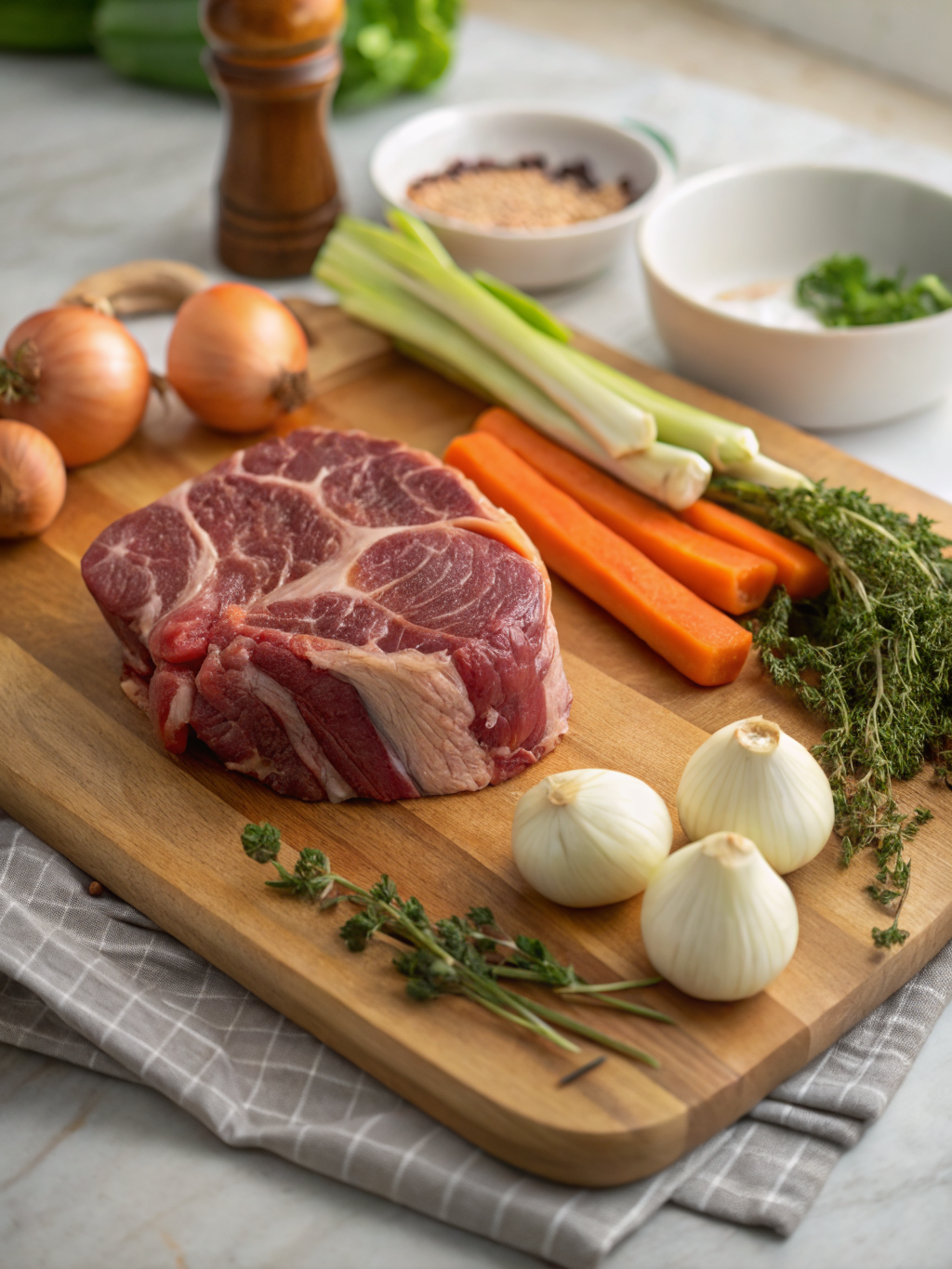
- 4 beef shanks (about 3-4 inches thick, approximately 3-4 pounds total)
- 2 tablespoons olive oil
- 2 large onions, roughly chopped
- 4 carrots, peeled and cut into 1-inch pieces
- 4 celery stalks, cut into 1-inch pieces
- 6 garlic cloves, minced
- 2 tablespoons tomato paste
- 1 cup dry red wine (such as Cabernet Sauvignon or Merlot)
- 4 cups beef broth (low-sodium preferred)
- 2 bay leaves
- 4 sprigs fresh thyme
- 2 sprigs fresh rosemary
- 1 tablespoon Worcestershire sauce
- Salt and freshly ground black pepper to taste
- 2 tablespoons fresh parsley, chopped (for garnish)
Substitution options: For a non-alcoholic version, replace the red wine with additional beef broth and 1 tablespoon of balsamic vinegar. Dried herbs can substitute for fresh at a ratio of 1 teaspoon dried for each tablespoon of fresh herbs.
Timing
Preparation time: 25 minutes
Cooking time: 3 hours 15 minutes (45 minutes less than traditional oven methods)
Total time: 3 hours 40 minutes
The beauty of this beef shank recipe is that while it takes time, most of it is hands-off, allowing you to attend to other tasks while the magic happens in your Dutch oven or slow cooker.
Step-by-Step Instructions
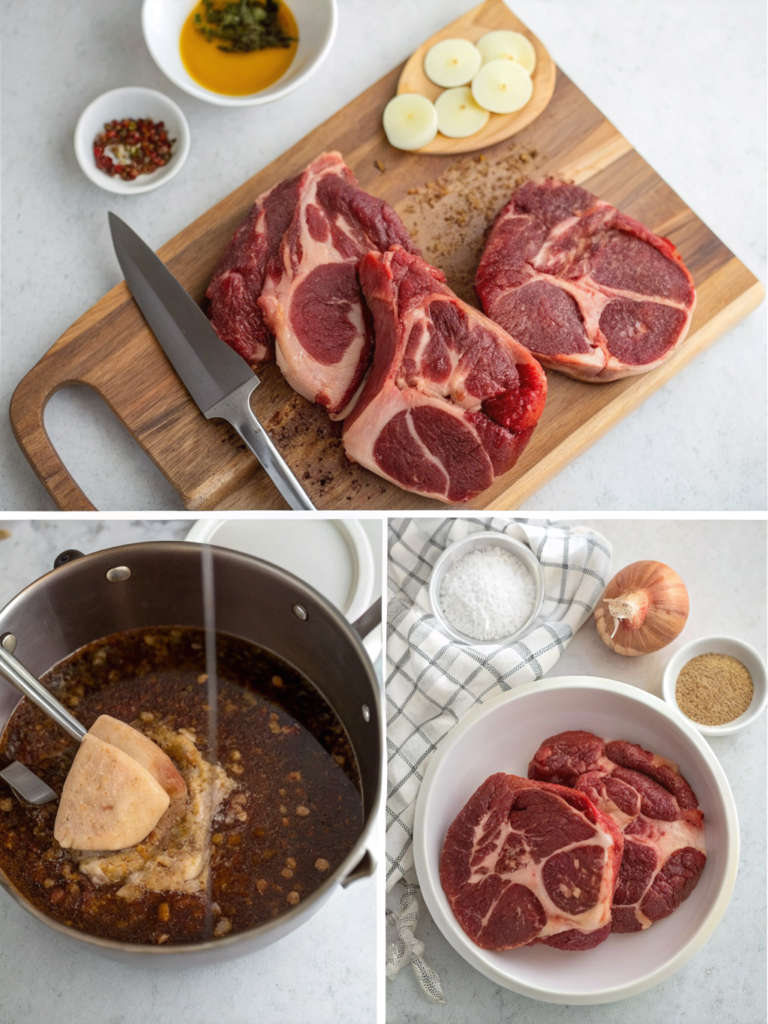
Step 1: Prepare the Beef Shanks
Pat the beef shanks dry with paper towels. Season generously with salt and pepper on both sides. This crucial first step ensures proper browning and flavor development. Allow the seasoned shanks to sit at room temperature for about 30 minutes before cooking.
Step 2: Sear the Meat
Heat olive oil in a large Dutch oven over medium-high heat until shimmering. Working in batches if necessary to avoid overcrowding, sear the beef shanks for 4-5 minutes per side until deeply browned. A proper sear creates the foundation for the rich flavor profile of the finished dish.
Step 3: Build the Aromatics
Remove the shanks and set aside. In the same pot, add onions, carrots, and celery. Cook for 5-7 minutes until the vegetables begin to soften. Add garlic and cook for another minute until fragrant. Stir in tomato paste and cook for 2 minutes, allowing it to caramelize slightly.
Step 4: Deglaze the Pot
Pour in the red wine, scraping the bottom of the pot with a wooden spoon to loosen all the flavorful browned bits. Let the wine reduce by half, about 5 minutes. This step concentrates the flavors and burns off the alcohol while retaining the wine’s complex notes.
Step 5: Combine and Slow Cook
Return the beef shanks to the pot. Add beef broth, bay leaves, thyme, rosemary, and Worcestershire sauce. The liquid should come about three-quarters of the way up the shanks. Bring to a gentle boil, then reduce heat to low. Cover and simmer for 2.5-3 hours, until the meat is fork-tender and nearly falling off the bone.
Step 6: Finish the Sauce
Once the meat is tender, carefully remove the shanks to a serving platter. Strain the cooking liquid if desired for a smoother sauce, or leave the vegetables for a more rustic presentation. Increase heat to medium-high and simmer the sauce uncovered for 10-15 minutes until slightly thickened.
Step 7: Serve
Return the shanks to the pot to warm through if needed. Serve each shank with plenty of sauce and vegetables. Garnish with fresh parsley. The bright herb adds a fresh contrast to the rich, deeply flavored dish.
Nutritional Information
- Per serving (based on 4 servings):
- Calories: 520
- Protein: 45g
- Fat: 25g (8g saturated)
- Carbohydrates: 15g
- Fiber: 3g
- Sodium: 650mg (using low-sodium broth)
- Iron: 8mg (45% of daily recommended intake)
- Zinc: 12mg (109% of daily recommended intake)
This braised beef shank recipe is particularly rich in protein, B vitamins, iron, and zinc, making it not just delicious but nutritionally valuable as well. The collagen that breaks down during cooking also provides beneficial amino acids for joint health.
Healthier Alternatives for the Recipe
To create a lighter version of this hearty dish, consider these modifications:
1. Reduce the oil to 1 tablespoon and use a non-stick Dutch oven for the initial searing.
2. Skim the fat from the sauce before serving, or better yet, make the dish a day ahead, refrigerate, and remove the solidified fat before reheating.
3. Increase the vegetable content by adding mushrooms, which provide umami flavor without additional calories.
4. Use a sodium-free beef broth and enhance flavor with additional herbs instead of salt.
5. For a paleo or keto-friendly version, omit the tomato paste and use additional herbs and spices for flavor complexity.
Serving Suggestions
This robust dish pairs beautifully with various sides that complement its rich flavors:
- 1. Creamy polenta or mashed potatoes make an ideal base to soak up the luscious sauce.
- 2. For a lighter option, serve with roasted root vegetables or a simple green salad with a bright vinaigrette.
- 3. Crusty sourdough bread is perfect for mopping up the sauce.
- 4. For an Italian twist, serve over risotto Milanese or with gremolata (a mixture of lemon zest, garlic, and parsley) sprinkled on top.
- 5. A side of sautéed greens like kale or Swiss chard adds color and nutritional balance.
Common Mistakes to Avoid
- Skipping the sear: Properly browning the meat creates depth of flavor through the Maillard reaction. Don’t rush this crucial step.
- Cooking at too high a temperature: Low and slow is the mantra for beef shanks. High heat will toughen the meat rather than tenderize it.
- Not allowing enough cooking time: Beef shanks need sufficient time to break down their collagen. If the meat isn’t tender, it likely needs more time.
- Oversalting early: As the liquid reduces, the saltiness concentrates. Start with less salt and adjust at the end.
- Discarding the marrow: The marrow in beef shanks becomes buttery when cooked and adds incredible richness to the dish. Don’t waste this culinary treasure!
Storing Tips for the Recipe
This dish actually improves with time as flavors meld, making it perfect for meal prep:
Refrigeration: Store cooled leftovers in an airtight container for up to 4 days. The flavors will continue to develop, making day-two servings even more delicious.
Freezing: This dish freezes exceptionally well for up to 3 months. Freeze individual portions in freezer-safe containers for easy weeknight dinners. Thaw overnight in the refrigerator before reheating.
Reheating: Warm gently over low heat on the stovetop or at 325°F in the oven until heated through. Add a splash of broth if the sauce has thickened too much during storage.
Conclusion
Mastering this slow-cooked beef shank recipe opens the door to economical, nutritious, and incredibly flavorful meals that showcase your culinary skills. The patience required is rewarded with fork-tender meat in a rich, complex sauce that’s sure to impress.
Don’t be intimidated by the cooking time—most of it is hands-off, allowing you to go about your day while dinner practically makes itself. The transformative power of slow cooking turns this humble cut into something truly special.
Have you tried this recipe? I’d love to hear your experiences, variations, or questions in the comments below. And if you enjoyed this dish, be sure to check out our other economical meat recipes that deliver maximum flavor with minimum fuss!